The Best Infrared Saunas of 2026
 By Pete Caldwell, Sauna Master
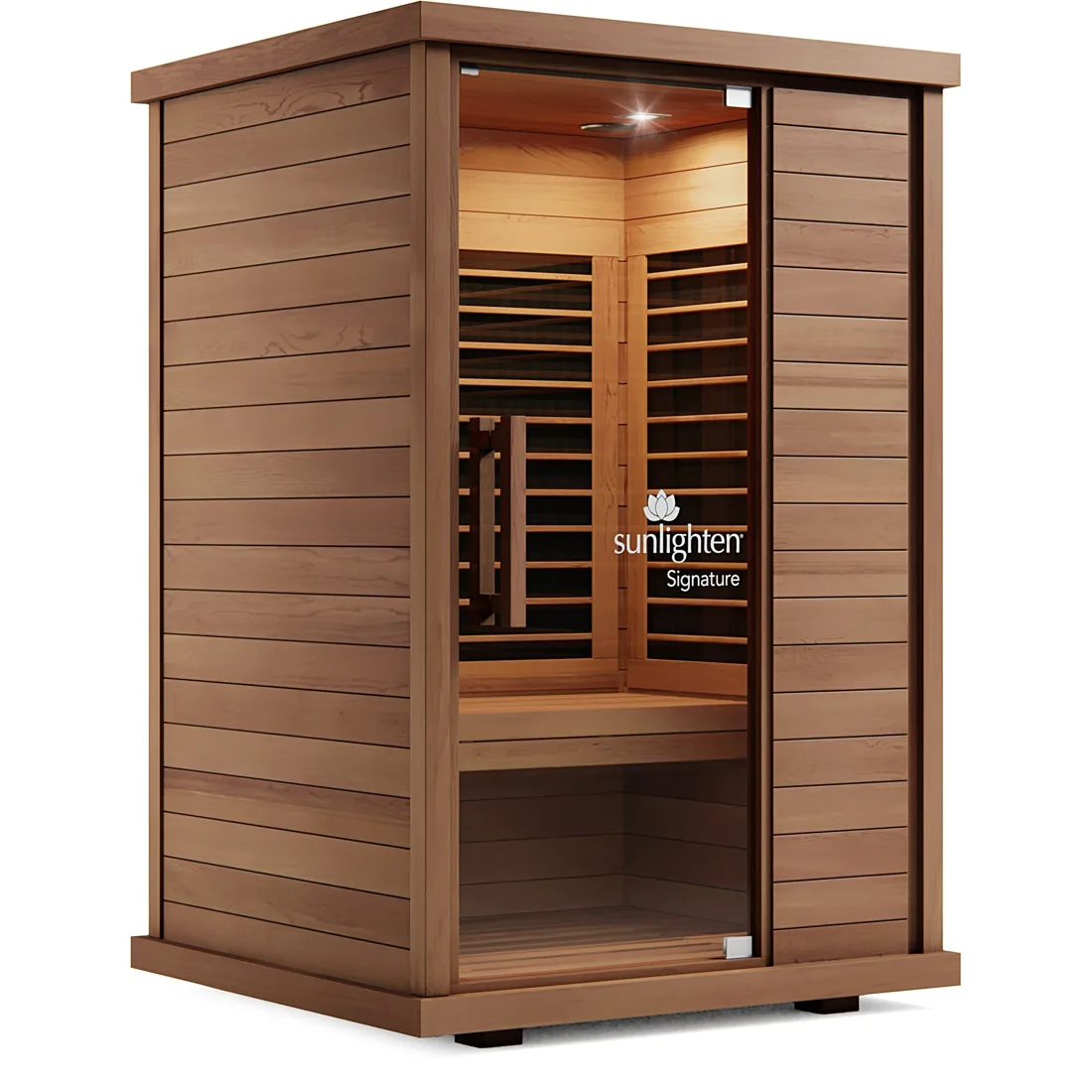
The best infrared sauna for most people is a Sunlighten, and I say that having compared a dozen-plus brands across every size and type. This page is my overview of the whole field, with deeper guides for the 1-person and 2-person sizes linked from here. Sunlighten is my overall brand pick because it builds its own full-spectrum SoloCarbon heaters, engineered for high infrared output at ultra-low EMF, and that EMF spec is what matters when you sit in a cabin nearly every day.
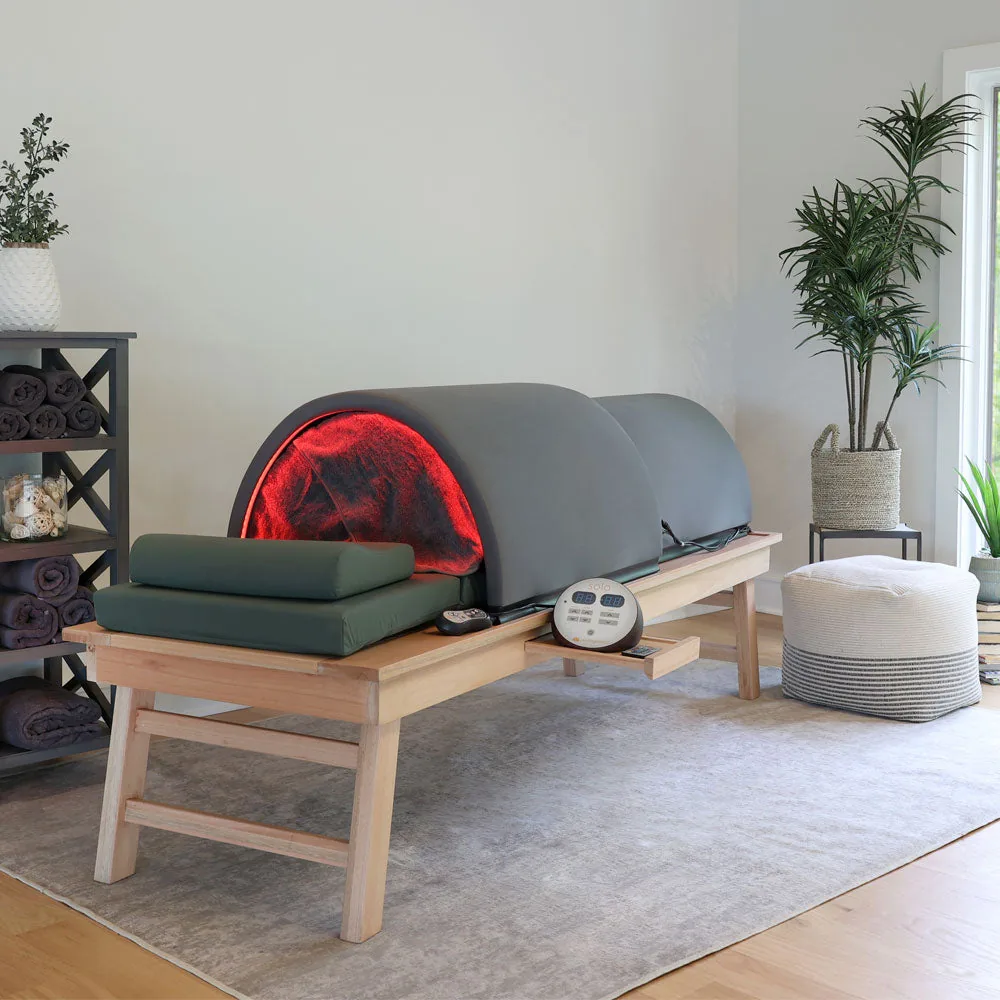
By use case: the Signature I is the best 1-person cabin, the Signature II is the best for two, the Solo portable is the ~$2,000 way in, the full-spectrum mPulse is the smart step-up, and the Peak Patagonia is my outdoor pick. That said, these are premium picks. If budget rules, honest far-infrared cabinets exist from Backyard Discovery, Dynamic, and JNH for under $2,000, and I will tell you where they make sense. Prices checked 23 June 2026.
- Sunlighten Signature II Best overall ~$5,599 Check price
- Sunlighten Solo Best portable ~$1,999 Check price
- Peak Patagonia Best outdoor ~$10,450 Check price
Why I back Sunlighten as the overall brand
I will be straight with you: I did not pick Sunlighten because it was the only brand I looked at. I weighed a dozen-plus across portables, cabins, full-spectrum, and outdoor units. Sunlighten wins overall because it builds its own heaters, the SoloCarbon panels, and they are engineered for high far-infrared output at very low EMF. That EMF number is the spec I care about most, because the whole point of a home sauna is that you sit in it almost every day, inches from the panels. Plenty of cheaper cabinets quote "low EMF" with nothing behind it. Sunlighten has the testing to back the claim, and the installers and owners I talk to almost never report a heater failure on these.
Beyond the heater, the cabins are solid eucalyptus, they run from a one-touch control nobody needs a manual for, and they are HSA/FSA eligible through Truemed, which is a genuine way to knock real money off the price with pre-tax dollars. The two picks I would actually put in my own home are the Signature II for two, around $5,599, and the Signature I for one, around $5,099. If you want a sauna out in the yard rather than indoors, Peak is the brand I trust for weatherproof outdoor cabins. And if the heater tech and EMF figures do not matter to you and the budget does, scroll down to the field I compared, because there are honest cheaper options.
The brands I compared
I did not just pick a sponsor. Here is the field I weighed across every size and type of infrared sauna, and the honest read on each.
Full-spectrum, patented SoloCarbon heaters, ultra-low EMF. My overall pick.
Design-led full-spectrum, the brand Forbes favored. Strong, pricier.
Well-known premium, good warranty, but its saunas are sold dealer-style.
Ultra-low EMF and verified zero-VOC, a clean-build favorite.
The mass-market value cabins (Sicily, Barcelona) you see at Lowe's and Home Depot.
Genuinely good value cedar cabins at retail (the Rylan).
Budget-friendly far-infrared (the Tosi line).
Rare affordable full-spectrum, strong online following.
Better known for blankets, also sells some cabins.
Clean, low-tox builds, a quiet favorite of the chemically sensitive.
Sunlighten Solo and mPulse aside, these two round out the budget retail field.
Outdoor full-spectrum, if you want it in the yard. My outdoor pick.
Best infrared saunas compared
| Model | Brand | Best for | Type | Price (checked 23 Jun 2026) | Our take |
|---|---|---|---|---|---|
| Sunlighten Signature I | Sunlighten | Best 1-person Our pick | Far-infrared cabin | ~$5,099 | Best 1-person heater tech. |
| Sunlighten Signature II | Sunlighten | Best 2-person Our pick | Far-infrared cabin | ~$5,599 | Same for two. |
| Sunlighten Solo | Sunlighten | Best portable Our pick | Portable far infrared | ~$1,999 | Lowest entry into real SoloCarbon. |
| Sunlighten mPulse | Sunlighten | Best full-spectrum Our pick | Full-spectrum smart | By quote | Red to far infrared, smart, ultra-low EMF. |
| Backyard Discovery Rylan | Backyard Discovery | Best budget cabin | Far-infrared cedar | ~$1,799 | Genuine retail value. |
| Dynamic Barcelona | Dynamic / Golden Designs | Most popular value | Far infrared | ~$1,899 | Big-retailer volume seller. |
| Peak Patagonia | Peak Saunas | Best outdoor Our pick | Outdoor full-spectrum | ~$10,450 | For the backyard, red light and WiFi. |
| Sun Home Equinox | Sun Home Saunas | Premium design | Full spectrum | ~$6,999 | Design-led, Forbes favorite, pricey. |
Prices are checked direct on 23 June 2026 and move with sales. The mPulse is sold by quote. I do not average borrowed star scores here; the "our take" column is my own read after comparing the field, and I explain why each unit earns or loses its place rather than dress it up with a number.
Best infrared saunas by size
This page is the overview across the whole field. When you have settled on a size, the size guides below go deeper, with their own ranked picks, broader tables, and the budget alternatives that make sense at each footprint.
- Best 1-person infrared saunas, the premium solo cabins, the Solo portable, and the honest budget alternatives, with their own ranked picks.
- Best 2-person infrared saunas, room for two with the premium cabins compared in detail and the value options weighed honestly.
How much does an infrared sauna cost?
Here is the honest range, top to bottom, after comparing the lot. A budget far-infrared cabin from Dynamic, JNH, or a Costco rotation lands around $1,300 to $1,900. Backyard Discovery's cedar Rylan sits near $1,800 and is the value cabin I would actually trust. Sunlighten's Solo portable is about $2,000 for real SoloCarbon heat. Premium far-infrared cabins like the Signature I and II run roughly $5,000 to $5,600, design-led full-spectrum units like the Sun Home Equinox push toward $7,000, full-spectrum smart units like the mPulse are quoted rather than listed, and outdoor cabins like the Peak Patagonia start around $10,450.
My read: the cheap cabinets are not a scam, they just rarely match SoloCarbon's infrared output, EMF testing, or warranty. If budget rules, buy the budget cabin and do not feel bad about it. If you plan to use it daily for years, the premium money buys reliability you will feel, and the HSA/FSA angle on Sunlighten quietly closes part of the gap.
Far vs near vs full spectrum, which do you need?
Infrared heaters emit different wavelengths, and the marketing leans hard on the difference. Here is the plain version I give people:
Far infrared heats your body directly at low air temperatures and is what most people picture when they think of an infrared sauna. For most buyers, a good low-EMF far-infrared cabin like the Sunlighten Signature line is all they need.
Near infrared is a shorter wavelength often associated with red light therapy and skin and cell claims. Full-spectrum cabins add it; the Peak outdoor cabins also include a dedicated red light panel.
Full spectrum combines near, mid, and far in one cabin. It is the premium option and usually the most expensive. Pay for it if you specifically want the near-infrared range; the Sunlighten mPulse is my indoor full-spectrum pick, while the Peak Patagonia brings full spectrum outdoors.
What is low EMF and does it matter?
EMF stands for electromagnetic field, the field any electric heater produces. Because you sit close to the panels for 20 to 40 minutes at a time, often several days a week, the field at the seated position is worth checking. This is exactly where the premium brands earn their price: Sunlighten engineers its patented SoloCarbon heaters for ultra-low EMF and publishes the figures. If you plan to use a sauna regularly, prefer cabins with documented low-EMF panels over ones that stay quiet about it. The evidence on health effects at these levels is not settled, so I treat low EMF as a reasonable preference for daily users rather than a proven medical necessity. (General guidance, confirm each unit's published EMF figures on its product page.)
120V plug-and-play vs hardwired, and wood types
Most indoor infrared saunas, including the Sunlighten cabins, run on a standard 120V household outlet, so there is no electrician and no special wiring, and that alone saves real money versus a traditional heater. Larger and outdoor units, like the Peak Patagonia, are more likely to need a dedicated circuit or hardwiring; if that matters, check the spec sheet and confirm your power supply before buying. For a typical indoor cabin, 120V plug-and-play is the norm and a clear convenience.
On wood: cedar is naturally aromatic and rot-resistant and tends to feel the most premium; eucalyptus, used in Sunlighten's Signature cabins, is a solid, sustainable hardwood. What matters most is that the wood is genuine and untreated so it does not off-gas as it heats, which is why I favor the premium brands that use real solid wood rather than veneer.
Infrared sauna buyer questions
What is the best infrared sauna?
After comparing a dozen-plus brands, my overall pick is Sunlighten, for its patented SoloCarbon heaters and ultra-low EMF. By use case: the Signature I is the best 1-person cabin (around $5,099), the Signature II is the best for two (around $5,599), the Solo portable is the lowest entry (around $1,999), the full-spectrum mPulse is the smart step-up (by quote), and the Peak Patagonia is the outdoor pick (around $10,450). "Best" depends on your space, budget, and whether you want far infrared or full spectrum, which is why I rank by use case rather than crown one model for everyone.
Can a person with a pacemaker use an infrared sauna?
Infrared saunas run at relatively low air temperatures, but heat exposure and a pacemaker is a medical question, so the safe answer is to ask your cardiologist before using one. Clinicians generally advise people with pacemakers or other cardiac devices to clear sauna use with their doctor first, because heat affects heart rate and circulation and individual situations vary. (See clinician-reviewed guidance such as GoodRx's infrared sauna overview. This is general information, not medical advice.)
Are infrared saunas good for your heart, or for conditions like Hashimoto's?
The strongest evidence for sauna and cardiovascular health comes from traditional Finnish saunas, not infrared specifically, and infrared research is newer and based on smaller studies, so I will not claim an infrared sauna treats any condition. Many people use one for relaxation and recovery, but if you are managing a thyroid, autoimmune, or hormonal condition, talk to your clinician before adding regular heat sessions. (Sauna cardiovascular benefits are best documented for traditional saunas; see Laukkanen et al., JAMA Internal Medicine, 2015. Infrared-specific research is newer and smaller.)
How long should a session last?
Most people do 20 to 40 minutes at the lower temperatures infrared cabins use. Start shorter, stay hydrated, and step out if you feel lightheaded.
The verdict
I compared a dozen-plus brands for this overview. My overall brand pick is Sunlighten, for the patented SoloCarbon infrared and the low EMF. By use case: the Signature I is the best 1-person cabin at about $5,099, the Signature II is the best for two at about $5,599, the Solo portable is the lowest entry at around $1,999, the full-spectrum mPulse is the smart step-up by quote, and the Peak Patagonia is the outdoor pick at around $10,450. And if budget rules, the budget cabins from Backyard Discovery, Dynamic, and JNH are fair buys; I just would not pretend they match the heater tech.
About the author
Pete Caldwell, Sauna Master. Pete has spent 11 years around home saunas. He researches and compares infrared, traditional, and outdoor models so you can buy the right one without the sales pitch. If a cheaper unit is the smarter buy, he will tell you.
Keep comparing
- The best 1-person infrared saunas, premium solo cabins and portables with their own ranked picks.
- The best 2-person infrared saunas, if you want room for two.
- Infrared vs traditional sauna, an honest comparison if you are still choosing a type.
- How we choose and score, our methodology.